
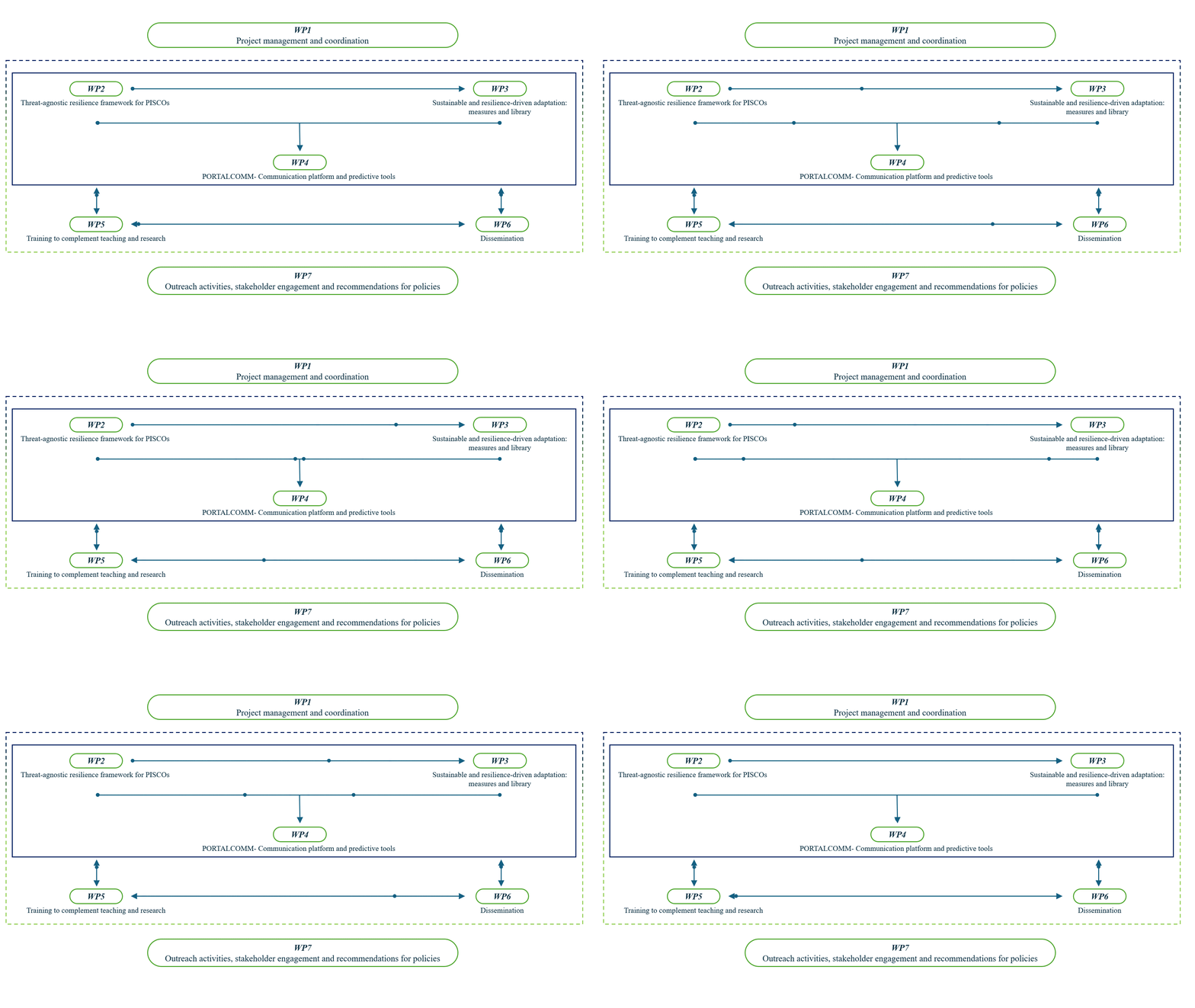

Baseline definition and PISCO characterisation
Establishing the project baseline across the PISCO (Port Infrastructure and interdependent Socio-eCOlogical systems) use cases. This phase focuses on defining each use case as a socio-ecological system (SES), identifying critical functions, infrastructure assets, operational dependencies, governance structures, and stakeholder ecosystems. Initial stakeholder mapping and Community of Practice (CoP) mobilisation will support data collection and context validation. This phase sets the boundary conditions for the PORTAL methodology and prepares the foundation for all subsequent modelling and development activities.

Threat-agnostic resilience framework design
Building on the baseline definition, PORTAL will develop and operationalise a comprehensive threat-agnostic resilience framework tailored to port ecosystems and interdependent socio-ecological systems (PISCO). This includes defining systemic vulnerabilities, interdependencies (intra-port and inter-port), and metrics to assess resilience and cascading failures. A key objective is ensuring the framework remains scalable and transferable across different port typologies and governance contexts.

Synthetic scenario generation and cascading failure analysis
PORTAL will generate a portfolio of synthetic threat-agnostic scenarios using Generative AI and adversarial learning approaches. These scenarios will be used to assess possible cascading disruptions affecting port operations, supply chain continuity, environmental systems, and societal functions. The modelling outputs will be validated through workshops and back-analysis of historical disruptions, strengthening confidence in the framework’s robustness under deep uncertainty and high-impact, low-probability events.
Co-creation of adaptation measures and NBS library
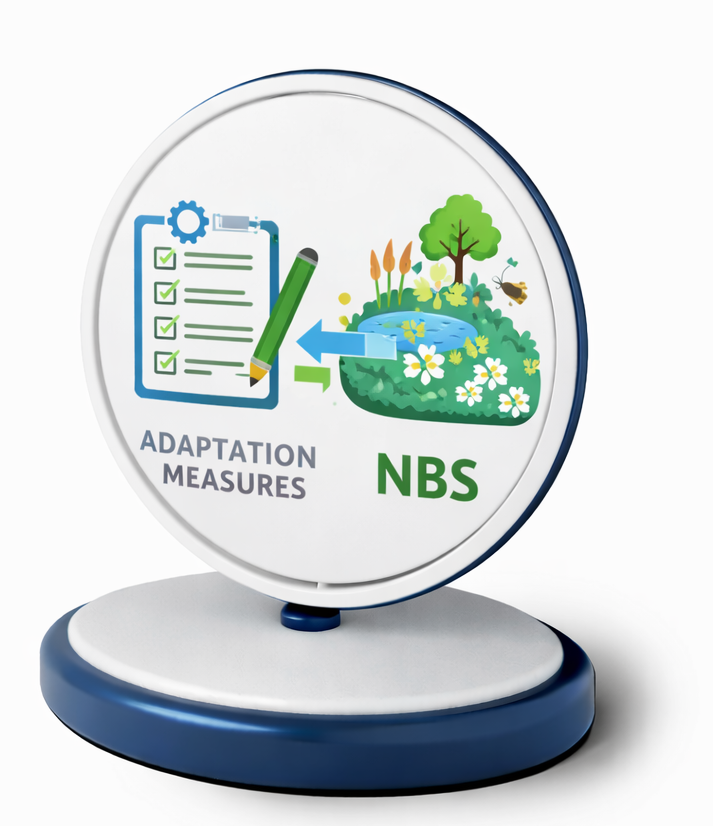
In parallel with Phase 3, PORTAL will build an openly available and generalised library of resilience and adaptation measures, including no-regret, low-regret, and win-win solutions such as Nature-Based Solutions (NBS). Measures will be categorised according to feasibility, resilience principles (e.g., redundancy, modularity, flexibility), governance constraints, and social acceptance. Techno-economic and sustainability dimensions will be incorporated using decision-support approaches (e.g., MCDA and cost–benefit logic) to strengthen investment cases for proactive adaptation.

Development of PORTALCOMM platform and predictive tools
PORTAL will develop and deploy a web-based multi-tier communication and decision-support platform (PORTALCOMM). This phase integrates modelling outputs into stakeholder-facing interfaces tailored to distinct personas (port operators/decision-makers, policymakers, and citizens/end-users). Predictive tools, digital twins (DT), and agent-based modelling and simulation (ABMS) will support scenario testing, gamification, and participatory design of adaptation pathways. This ensures that PORTAL outputs are actionable and usable across technical and non-technical audiences.

Integration, demonstration, training, and replication
All PORTAL outputs will be consolidated into validated workflows across the use cases, supported by training and capacity building activities. A structured training programme (e.g., MOOC, CPD seminars, workshops, AR/VR-based immersive learning) will promote knowledge transfer across academia–industry–community. This phase also delivers impact-focused replication pathways, exploitation planning, and policy recommendations addressing regulatory barriers and enabling uptake of threat-agnostic resilience strategies beyond the project’s lifetime.